
Service — Surveillance
When you need to know for sure.
Licensed Florida surveillance at $99 per hour, plus travel expenses. Video, photographs, and a written report you can actually use.
Surveillance
$99
Per hour · Plus travel expenses
You approve the hours before we start.
Every case begins with a conversation about what you need documented and how long that realistically takes. We give you an hour estimate and a travel estimate up front, and we check in before going past either one. If nothing is happening and more waiting would only cost you money, we say so.
Insurance Investigations
 A single injury claim comes down to a simple question: is the person living the way their claim says they are? A claimant who says they cannot lift a gallon of milk, or cannot stand for more than a few minutes, is making a statement about their daily life. Surveillance checks that statement against what actually happens.
We work workers' compensation, disability, liability, and personal injury files. A typical assignment starts with the adjuster's notes: the claimed limitations, the subject's address, a work schedule if one is known, vehicles, and any activity the file already documents. From there we plan time on site around the hours that matter. Early mornings, medical appointment days, and weekends usually tell you more than a weekday afternoon.
On site, the investigator works from a vehicle or another fixed position and documents what the subject does. The goal is steady, time-stamped video of ordinary activity: carrying groceries, loading a truck, mowing a lawn, working a side job. One clean sequence of a person doing the thing they said they could not do is worth more than a full day of footage of a closed front door.
Everything goes into a written report with the video. Times, locations, and a plain description of each activity, with clips labeled so an adjuster or attorney can find the moment that matters without scrubbing through the whole day. If the subject does nothing inconsistent with the claim, the report says that too. A clean surveillance is still useful-- it tells you the claim is probably honest, and you can stop spending money on it.
A few things decide whether footage actually helps a file. The video has to be continuous and unedited, the time and date have to be right, and the investigator has to be able to explain where they were sitting and what they were looking at. We shoot with that in mind from the first frame, and the report is written to be handed straight to counsel. If a claim goes to a hearing, the investigator who shot the video can testify to what they saw.
We also run shorter activity checks and alive-and-well checks when a full surveillance schedule is more than the file needs. If you are an adjuster or a defense attorney with a file to assign, call with the claim details and the dates that matter-- a hearing, an independent medical exam, a settlement conference-- and we will plan around them. The rate is $99 per hour plus travel, and you get an hour estimate before any work starts.
Cheating Spouses
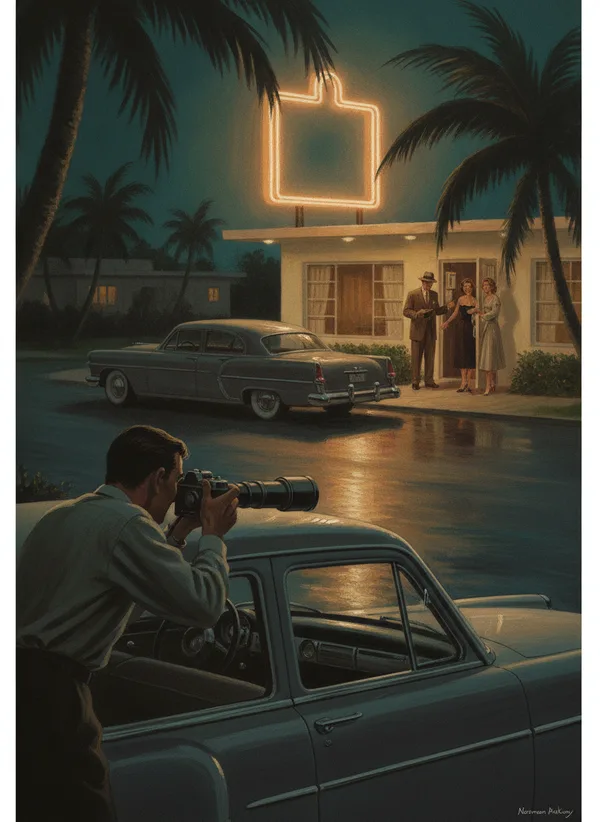 Most people who call us about a spouse already suspect something-- a schedule that stopped making sense, a phone that never leaves the room, explanations that change a little each time they get told. You do not need proof to call. You need to be tired of wondering.
A case starts with a private conversation about what you have noticed and what you want to know. Some clients want the truth before they confront a spouse. Some are already working with a divorce attorney and need documentation. Some want to be wrong. All three are normal, and we have worked all three.
From there we build a plan around your spouse's actual routine-- the gym nights, the overtime, the work trips. An investigator follows from a discreet distance and documents where they go, who they meet, and how long they stay. You get time-stamped photographs and video, plus a written report of the evening or weekend as it happened. The report covers who, where, and when, and lets the footage speak for itself.
We work in public places and from lawful vantage points. We do not hack phones, read text messages, or install software on anyone's devices, and we will tell you plainly if something you are asking for crosses a line. That honesty protects you as much as it protects us-- evidence gathered illegally can blow up a divorce case instead of helping it.
A little preparation on your end makes the case cheaper and faster. The more of your spouse's routine you can share up front-- work hours, the car they drive, a tag number, the places they claim to go-- the less time we spend finding the pattern. Recent photos help. So does a heads-up about the nights that matter most. And one request that protects the whole case: do not confront them, and do not hint that anyone is watching. A spouse who thinks they are being followed changes their behavior, and the pattern we need disappears.
Two things surprise most clients. The first is how fast a case can resolve; a person having an affair tends to follow a pattern, and patterns are what surveillance is built to catch. The second is how often the answer is no. Either way, you stop organizing your life around a question. If the footage does confirm an affair, talk to your attorney about how and whether to use it before you confront anyone.
Calls are confidential, and you can start with nothing more than a first name and a rough schedule. The rate is the same as all our surveillance work: $99 per hour, plus travel expenses.
Stake-Out Process Service
 Some people know exactly where the process server can find them. That is the problem. They see a stranger at the door, they go quiet, and they wait for you to leave. If you know where someone lives or stays but they will not answer the front door, a stake-out solves it: we wait for them to leave the house.
A stake-out is surveillance with a service of process at the end of it. The investigator sets up near the residence with the papers and waits. People have to come out eventually-- work, groceries, the gym, taking kids to school. When the subject steps off the property, the approach happens on neutral ground: the driveway, the sidewalk, a parking lot. Service is completed, and you get the affidavit along with notes on how it went down.
The same approach works anywhere a person reliably shows up. A workplace entrance at shift change. A gym at 6 a.m. A Sunday softball game. If home is a fortress, we look at the rest of the week and pick the spot where the subject is most exposed and least expecting it. You do not have to know that spot when you call-- figuring it out is part of the job.
To get started, we need the papers or your attorney's contact information, the best address you have, a photo of the subject if one exists, and any vehicles they drive. If you already have a process server on the case, we coordinate with them instead of replacing them-- sometimes the right setup is us on the street watching for movement while your server does the approach. Plan on more than one attempt being normal. People keep odd hours, and a subject who is dodging service on purpose rarely gets caught on the first morning.
In some cases we can also put a tracking device on a vehicle, which takes the guesswork out of when and where to approach. That is only lawful in specific situations-- and that specific situation is most often divorce, typically involving a jointly owned or marital vehicle. However, please contact us for your needs. Tell us the circumstances and we will tell you what Florida law allows before anyone touches a vehicle.
Stake-outs are billed like the rest of our surveillance: $99 per hour, plus travel expenses. Before we start, we talk through how long a wait is realistic for your subject's routine, so you are not paying for an open-ended camp-out. If the address is stale and nobody matching the subject comes or goes, you hear that from us quickly, with notes you can use to order a skip trace instead.
Surveillance Detection
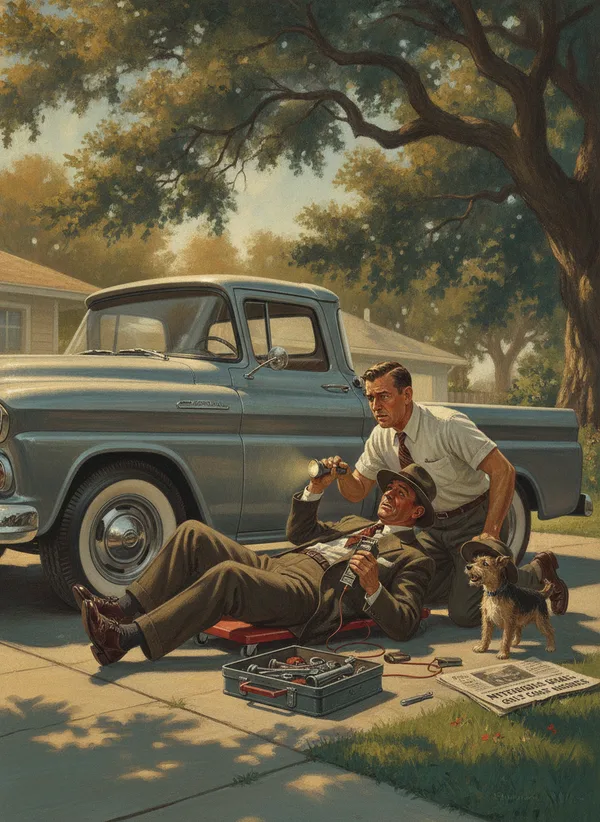 Do you think you are bugged? Is there a tracking device on your vehicle? Are you seeing the same car too often, or does someone seem to know things they could only have learned inside your house? Most people who ask these questions feel a little crazy asking them. You are not. These are exactly the questions a surveillance detection sweep is built to answer.
Surveillance detection-- often called counter-surveillance or a bug sweep-- is a physical and electronic search for devices that should not be there. We look for GPS trackers under and inside vehicles, hidden cameras in homes, offices, and rentals, and listening devices in the places where your private conversations happen.
A vehicle sweep is hands-on. Trackers are small, battery-powered, and usually magnetic, and they tend to live in the same handful of spots: wheel wells, under bumpers, inside the cabin, plugged into a diagnostic port. We inspect the whole vehicle rather than just the easy spots, and we photograph anything unusual before it gets removed or left in place.
A home or office sweep pairs a physical inspection with electronic detection equipment that picks up radio-frequency transmissions. The equipment has limits-- a device that is switched off, hard-wired, or recording instead of transmitting may not announce itself-- which is why the physical half of the search matters as much as the electronics.
If we find something, you decide what happens next. We document it, and in many cases the smart move is to leave it in place while you talk to an attorney or law enforcement, because removing a tracker tells whoever planted it that you know. If we find nothing, you get that answer in writing too, along with anything else we noticed-- an unlocked gate, a shared mailbox, a smart device with a password you never changed.
If your concern is a person rather than a device-- the same car outside your work, someone who turns up wherever you go-- we can document that too. Start a log now: dates, times, tag numbers, what you saw, and any messages you have received. A written pattern is what turns a bad feeling into something an attorney or a judge can act on. And if you believe you are in immediate danger, call law enforcement first. A sweep can wait a day; your safety cannot.
These cases come up in divorces, business disputes, stalking situations, and sometimes just a feeling that will not go away. Sweeps are billed at our standard rate of $99 per hour, plus travel expenses. Call and describe what you have noticed, and we will tell you honestly whether a sweep makes sense for your situation.
Some things are worth finding out.
Describe the situation. We will tell you what surveillance can and cannot do for it.